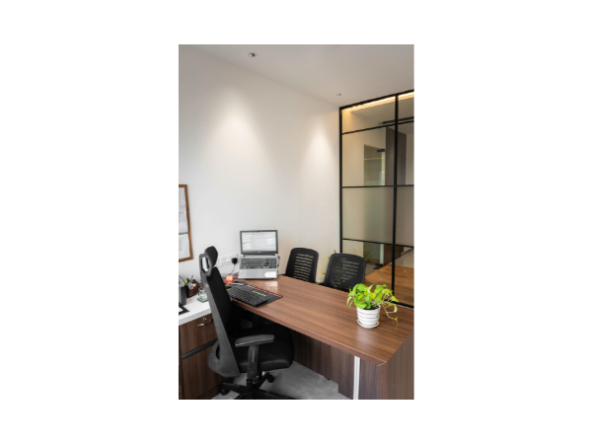


Managed office space is becoming a practical solution for companies in Bangalore dealing with the sudden shortage of desks created by stricter return-to-office mandates. TCS moved to five days a week back in October 2023. Flipkart followed in April 2025, pulling roughly 22,000 people back into its Bengaluru campuses. Wipro’s three-day, six-hour-a-day minimum kicked in this January. None of these mandates arrived with a matching real estate plan, and that’s the problem now playing out across managed office space in Bangalore — companies that shrank their footprint during the work-from-home years are suddenly short on desks for a workforce they now have to seat five days a week.
This piece looks at why the mandates and the real estate math stopped lining up, what it’s doing to rents and traffic across the city, and why flexible, managed office space in Bangalore has become the fastest way to close the gap.
The RTO Wave Sweeping Bangalore’s Biggest Employers
TCS’s return-to-office policy has only tightened since 2023. A February 2025 revision cut the allowed work-from-home exception down to six days a quarter, treated strictly as emergency leave. Infosys followed in March, tightening its attendance app so a work-from-home request auto-rejects once an employee falls short of ten office days a month — a rule touching roughly 323,000 employees at Job Level 5 and below. Cognizant set a three-day floor for its India staff, and CEO Ravi Kumar put the expectation plainly: employees are “expected to work from office for three days in a week, or as their team leaders seem fit.”
Amazon’s global five-day mandate took effect in January 2025 and covers its India hub sites. Wipro’s three-day, six-hour rule started this January too, with the company noting that limited office presence “can translate into reduced financial rewards and slower career progression” — attendance now tied directly to pay and promotion conversations. None of these are Bangalore-specific announcements, but office space in Bangalore absorbs more of this than almost any other Indian city, simply because so much of each company’s headcount sits here.
Why the Mandates Are Colliding With a Real Estate Shortage
Here’s the mismatch nobody planned around. Office footprints across the city shrank hard during the 2020-2023 stretch, when companies renegotiated leases down to match a workforce that mostly wasn’t showing up. Vacancy in Bangalore’s commercial market ran as high as 72 to 75% during that period. Then the mandates landed, headcount came back to the floor plate all at once, and a lot of companies discovered they’d downsized office space in Bangalore right at the moment they needed every seat back.
Rents responded fast. Prime micro-markets have seen leasing rates climb up to 30% since the RTO wave started, and average office rentals across Bengaluru crossed ₹100 per sq ft per month for the first time on record, according to Knight Frank’s H1 2026 report. That’s not a market drifting upward on its own — it’s demand for office space in Bangalore snapping back faster than supply can absorb it.
What the Numbers Actually Show
Demand for managed office space in Bangalore isn’t cooling off despite the higher rents. India’s total office absorption hit a record 23.9 to 24.6 million sq ft in the second quarter of 2026 alone, and the demand-supply gap across the market widened to roughly 9 million sq ft in that same quarter. Bengaluru’s own absorption ran to 6.4 million sq ft, up 13% year-on-year and 30% quarter-on-quarter, holding onto 27% of the entire country’s leasing share. Outer Ring Road alone accounted for 76% of everything leased in the city that quarter.
CBRE’s 2026 India Office Occupier Survey backs up how seriously companies are taking this. Some 77% of occupiers expect their India office portfolios to grow over the next two years, and 30% are targeting a significantly larger footprint than they currently hold. CBRE India’s chairman Anshuman Magazine described the broader pattern this way: “This strength is broad-based from GCCs deepening presence along with flexible space operators scaling.”
Traffic Is Making the Wrong Location Expensive Twice Over
The same CBRE survey found that 95% of occupiers now flag traffic congestion as an operational threat, and 70% say commute infrastructure is actively shaping where they choose to sign. That’s not an abstract concern in Bangalore anymore. Bengaluru’s traffic police have floated a 30% reduction in Outer Ring Road congestion if companies shifted more employees onto shared transport, and one logistics firm relocated off ORR entirely in September 2025 citing road conditions.
For a company weighing managed office space in Bangalore right now, location isn’t just about rent per square foot anymore. A building on the wrong stretch of ORR at peak hours can cost a company more in lost productivity and frustrated employees than a slightly higher rent somewhere with a cleaner commute.
Why a Traditional Lease Can’t Fix This Fast Enough
This is where the timeline problem really bites. A traditional lease on office space in Bangalore typically runs 6 to 18 months from signing to actual occupancy, once fit-out, approvals, and furnishing are factored in. A company that just got hit with a five-day mandate doesn’t have that kind of runway — the desks are needed now, not next year.
Managed office space in Bangalore moves at a completely different pace than a traditional lease does. A standard plug-and-play setup can go from signing to occupied in 2 to 8 weeks, and even a custom fit-out inside a managed building typically closes in 60 to 90 days. Table Space, one of the larger managed operators in this market, has taken on assignments as large as an 8,000-seat expansion across three cities in under ten months — a scale and speed a traditional lease process simply isn’t built to match.
How Managed Office Space Helps Close the Gap
The deposit structure alone explains part of why companies default to managed office space in Bangalore when they’re moving fast. A traditional lease typically asks for 6 to 12 months of rent upfront as a security deposit; a managed office agreement usually asks for 1 to 2 months. That difference in locked-up capital matters when a company needs to seat people this quarter, not after a slow-moving negotiation clears finance and legal.
India’s flexible office stock has grown roughly sixfold since 2020, and Bengaluru now holds close to a third of the country’s total flex inventory. Cushman & Wakefield’s Ramita Arora, who leads the firm’s flex practice in India, put the sector’s position this way: “India’s flexible office sector is widely recognised as a global pacesetter. What sets it apart is maturity, diversity of operators, and ability to pivot with demand.” Roughly 72% of flex seat absorption nationally now comes from international enterprises leasing managed office space in Bangalore and similar hubs, not the startups the format was originally built for.
Managed Office Space: Which Corridors Are Absorbing the Overflow
Outer Ring Road remains the obvious first stop for any company scrambling to add seats to managed office space in Bangalore, simply because it already carries the deepest concentration of managed and flex inventory in the city. Whitefield and Sarjapur run a close second, both offering large-floor managed stock at a lower price point than ORR’s premium corridor. Managed office space in Bangalore generally runs ₹10,000 to ₹24,000 per seat per month depending on the building and corridor, giving companies a range to work with depending on how fast and how large the overflow need actually is.
What GCCs and Large Enterprises Are Actually Doing
Vestian’s CEO Shrinivas Rao summed up where enterprise demand is heading: “With GCC demand accelerating, flex operators are expected to play a critical role in offering speed-to-market, enterprise-grade infrastructure and compliance-ready workspaces.” That’s exactly the logic playing out with RTO-driven overflow. Rather than renegotiating an entire headquarters lease under time pressure, a growing number of companies are taking a managed or flex block as a bridge, buying time to plan a proper long-term footprint without leaving new hires without a desk in the meantime.
GCCs alone account for more than 40% of India’s total demand for office space in Bangalore and other major hubs over the past two years, and that appetite hasn’t slowed even as RTO mandates squeeze existing floor plates. The two trends are compounding each other: more headcount coming into the office, and more of that headcount arriving through GCCs that are already comfortable using flexible, managed office space in Bangalore as part of a normal real estate strategy rather than a stopgap.
A Practical Checklist Before Signing Overflow Space
Start with actual headcount math for managed office space in Bangalore, not the number on the original lease. Count who’s mandated back and on what schedule, since a three-day mandate needs meaningfully fewer permanent desks than a five-day one once hoteling and shared seating are factored in.
Confirm how fast a shortlisted managed office space in Bangalore can actually be occupied, not just quoted. A provider promising a two-week turnaround should be able to show a comparable project it delivered on that timeline.
Ask directly about the deposit and term length on managed office space in Bangalore before assuming flex space is automatically cheaper. The lower upfront capital is real, but per-seat monthly costs on managed space can run higher than a long-term lease once the bridge period stretches past a year.
And factor commute data into the corridor decision, not just rent. A cheaper building on a corridor employees hate commuting to defeats the purpose of solving an attendance mandate in the first place.
Is Overflow Space the Right Move for Your Company
Companies facing a genuine near-term shortfall in office space in Bangalore — new mandate, growing headcount, or both — are the clearest fit for a managed or flex bridge. Companies with more runway, where the mandate rollout is gradual or partial, may be better served waiting for a proper lease renegotiation rather than paying managed office space in Bangalore’s flex-level per-seat pricing indefinitely.
The decision usually comes down to how much time a company actually has. If the gap between mandated attendance and available desks is measured in weeks, a traditional lease was never going to close it in time anyway.
Final Thoughts
The RTO mandates sweeping through Bangalore’s biggest employers didn’t come with a real estate plan attached, and that gap is exactly what’s driving so much of the current demand for managed office space in Bangalore. Rents have already moved, vacancy has tightened, and the companies figuring this out fastest are treating flexible space as the bridge rather than waiting for a slow lease process to catch up with a mandate that’s already in effect.
For any company still running the math on managed office space in Bangalore this year, the RTO wave isn’t a temporary spike to wait out. It’s a structural shift in how much space companies need and how fast they need it, and the ones adjusting their real estate strategy now are the ones avoiding a scramble later.