

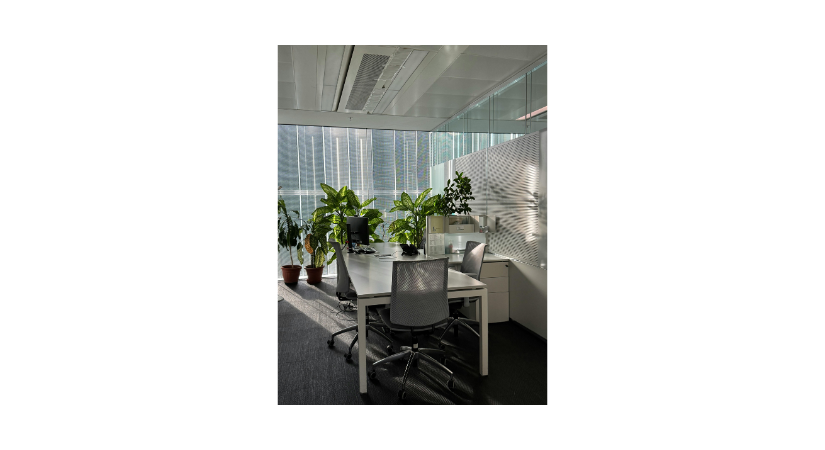
Green-certified office space in Bangalore is becoming an increasingly important consideration for companies looking for commercial space. Certified buildings in Bangalore are pulling a 23 to 25% rental premium over uncertified ones right now — the widest gap anywhere in the country. A few years back, a green label barely moved the needle on what a landlord could charge. Tenants are increasingly refusing to even shortlist a building that can’t produce the paperwork.
This piece looks at how much of green-certified office space in Bangalore actually exists today, what LEED, IGBC, and WELL certifications mean in practice, and why sustainability has moved from a marketing line to a real factor in leasing decisions.
How Much Green Office Space Is Available in Bangalore?
Roughly 65% of Grade A green-certified office space in Bangalore and India’s other top seven cities carries some form of certification today, covering 805 out of 1,362 Grade A buildings tracked nationally. Bengaluru holds the largest absolute share of that certified stock of any city, at close to 172 million sq ft.
Percentage isn’t the full picture though. Chennai actually posts the highest certification rate at 83%, ahead of Bengaluru on that specific measure. What Bengaluru has instead is raw volume — enough Grade A construction that its certified square footage outpaces every other Indian city regardless of the percentage table. Size plays into this too: buildings over 10 lakh sq ft hit a 90% certification rate, while anything under 5 lakh sq ft drops to around 47%. That size effect matters directly for anyone comparing green-certified office space in Bangalore across different building formats.
LEED, IGBC, and WELL: What These Certifications Actually Mean
LEED vs IGBC: Which One Dominates
Among certified buildings tracked right now, LEED accounts for close to 74% of the market, with IGBC — the domestic standard from the Indian Green Building Council — taking the remaining share. Within LEED specifically, close to half, 49%, land at Gold, one tier below the top Platinum rating.
Both frameworks score a building on energy usage, water efficiency, indoor air quality, and the materials used in construction. LEED carries more international recognition, which matters for a GCC or MNC reporting sustainability metrics back to a global parent company. IGBC tends to be more cost-effective to pursue and better tailored to Indian climate and construction conditions. That difference shapes which standard developers reach for when planning a new green-certified office space in Bangalore project.
WELL Certification and Occupant Health
WELL certification takes a different angle, scoring a building on how it affects the people inside it rather than just the structure itself — air quality, lighting, acoustics, and general occupant wellness. It’s newer to the Indian market than LEED or IGBC, but adoption is climbing fast among developers targeting large corporate and GCC tenants specifically, since occupant wellness data increasingly shows up in the same ESG reports that used to focus purely on energy metrics. More WELL-certified green-certified office space in Bangalore is entering the pipeline every quarter as a result.
The Rental Premium Green Buildings Actually Command
The financial case for green-certified office space in Bangalore isn’t subtle anymore. Green-certified buildings nationally earn roughly 11% higher rental income than conventional ones, with average rents around ₹120 per sq ft per month against ₹108 for uncertified space. Resale values run about 21% higher too, which matters as much to developers deciding whether certification is worth pursuing as it does to tenants deciding where to lease.
Green-certified office space in Bangalore sits well above that national average, with certified buildings commanding a 23 to 25% premium over comparable uncertified stock in the city. That’s the widest gap of any major Indian market, and it’s a big part of why so much new Grade A construction in Bengaluru now pursues certification from the design stage rather than retrofitting it in later.
There’s a second, quieter number worth knowing here — the operating side. A certified building can cut energy consumption nearly in half compared to conventional construction, sometimes as little as 20% and sometimes closer to 50% depending on how aggressively it was designed. Water use drops by a similar margin, and maintenance costs come down too, generally somewhere in the 25 to 35% range. None of that shows up on a landlord’s marketing brochure, but it lands squarely on a tenant’s CAM charges, month after month, for as long as the lease runs.
Why Tenants Are Demanding This Now
GCCs and ESG Mandates
Talk to a GCC real estate lead in this city right now and carbon neutrality comes up fast. About 85% of GCCs operating here and across other Indian cities have already committed to a 2030 target, and that commitment rarely stays boxed inside an internal sustainability report. Headquarters wants every market reporting the same ESG numbers, which means the India office needs to be sitting in certified space too, not just the buildings back home. Once that policy comes down from above, the local real estate team stops having a real say in whether certification is optional.
Corporate Occupiers Beyond GCCs
This isn’t limited to GCCs either. A growing share of corporate occupiers across sectors now list ESG-ready real estate as a genuine requirement rather than a preference, and developers offering green-certified office space in Bangalore report faster lease closures and stronger tenant retention as a direct result. Investors have picked up on the same shift — roughly 15% more investors now say they prefer green-certified assets over conventional ones when weighing where to put capital.
What Certification Actually Costs a Developer
None of this comes free for a developer building green-certified office space in Bangalore. The premium climbs with the tier: roughly 1.5 to 3% of total project cost for LEED Silver, 3 to 5% for Gold, and past 8% once Platinum-level design, construction, and consultant work all get tallied. WELL adds a separate 1 to 4%, plus a recurring verification fee every three years to keep the rating active.
The process moves faster than most developers assume going in. LEED’s actual review — design and construction — usually wraps in one to three months once the paperwork lands. WELL runs a similar one to two months for documentation, plus a round of on-site testing after that. Stretch the whole thing out, construction included, and most new builds close out certification somewhere between three and twelve months.
Where to Find Green-Certified Office Space in Bangalore
Certification is becoming the default rather than an add-on across Bengaluru’s newer Grade A green-certified office space in Bangalore. Brigade’s Padmini Tech Valley already carries both IGBC Gold and LEED Platinum pre-certification, and projects like Brigade Cornerstone Utopia out in Whitefield and Varthur are folding sustainability into the design from the ground up rather than bolting it on afterward.
Outer Ring Road and Whitefield, the corridors already carrying the bulk of the city’s large-format office space in Bangalore, are seeing the fastest growth in certified stock specifically, since these are also the corridors GCCs and large tech tenants favor most heavily — the same tenant profile driving demand for certification in the first place. Expect that share of green-certified office space in Bangalore to keep climbing as more projects break ground along both corridors.
How to Verify a Building’s Certification Before You Sign
A broker calling a building “green” or “eco-friendly” isn’t the same as that building holding a certificate, and touring green-certified office space in Bangalore is the point where that distinction actually matters. Get the paperwork itself, not the pitch. Certifications lapse and need renewing, so an old plaque bolted to the lobby wall doesn’t confirm much about where things stand today.
Tier matters just as much as the label. “LEED-certified” on its own could mean the entry-level tier or it could mean Platinum, and the gap in operating cost savings between those two is real — worth asking which one a specific building actually holds rather than assuming the higher end.
There’s also the question of scope. Sometimes only the building shell carries the certification, sometimes it’s the specific floor being leased, and sometimes it covers the whole project down to the common areas. On a large mixed-use development these aren’t interchangeable, so it’s worth pinning down exactly what’s covered before signing.
One more thing worth pushing on: how any of this shows up in the CAM charges. Lower utility costs from a certified building ought to be visible in the maintenance bill somewhere. A landlord who can’t walk through that math is probably selling marketing more than substance.
Green Certification vs Just “Energy Efficient”: Know the Difference
A lot of buildings market themselves as energy efficient or eco-conscious without actually holding a real certification from LEED, IGBC, or WELL. That distinction matters more than it sounds like it should. An uncertified building might actually use less power than average, but without third-party verification, there’s no way to compare it against another building or confirm the claim holds up over time.
Green-certified office space in Bangalore comes with an actual audit trail — documentation, third-party assessment, and a renewal cycle that keeps the building accountable to the standard it originally met. A landlord using “sustainable” as a marketing word without any certificate behind it isn’t offering the same thing as genuine green-certified office space in Bangalore, even if some of the underlying features overlap.
Choosing Green Office Space in Bangalore: What Companies Should Know
For a company setting up a GCC or expanding its India footprint, factoring certification into the shortlist from day one avoids a costly retrofit later. Switching a mid-lease building to certified status is far more disruptive and expensive than choosing green-certified office space in Bangalore from the start, when the option is already available across most major corridors.
Budget-conscious teams evaluating office space in Bangalore sometimes assume certified buildings are out of reach on cost. That’s less true than it used to be. With certified stock now covering a large share of new Grade A supply across the city, the rent premium is often smaller than the operating cost savings certification delivers over a multi-year lease, particularly once utility and maintenance costs are counted alongside the base rent.
Final Thoughts
A nice-to-have doesn’t usually command a 23 to 25% rental premium or show up as a signing requirement in a GCC’s real estate brief. Green-certified office space in Bangalore has crossed well past that point already. Bengaluru is sitting on roughly 172 million sq ft of certified stock, and more of the city’s new Grade A supply keeps chasing certification from the drawing-board stage rather than bolting it on after the fact — which is a fairly reliable sign this isn’t reversing anytime soon.
So for a business sizing up office space in Bangalore today, sustainability credentials deserve a real line on the shortlist checklist, not a footnote somewhere near the bottom. That’s already how a growing share of the market treats green-certified office space in Bangalore, and the rest of the market is catching up faster than most people expect.