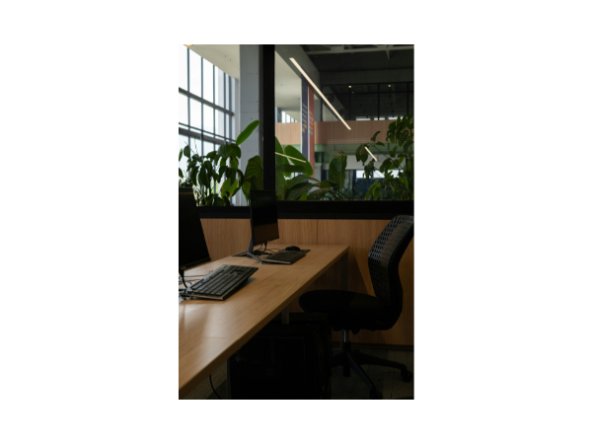


An HR head at a 40-person fintech told me something a few months back that I haven’t stopped thinking about. Her team hadn’t shrunk. Her office had. Not because business slowed down, but because nobody showed up on the same days anymore — Mondays looked packed, Wednesdays looked like a ghost town, and by Friday she wasn’t sure who’d even bother coming in. That’s roughly the mess a lot of Bangalore companies are dealing with right now, and it’s changing what people actually ask for when they start looking at hybrid office Bangalore solutions instead of a standard lease.
For years the math was simple. Count your people, add a few desks for the new hires you’ll make next quarter, sign the lease. Nobody thinks that way anymore. Now the question is more like: how many of these people will physically be in a chair on a random Tuesday? Do we even need one fixed address, or would a co-working space in Bangalore make more sense while we figure out what our attendance policy is actually going to look like six months from now? It’s not a hypothetical anymore. Founders and ops folks are wrestling with this every week, sometimes in the same meeting where they’re also arguing about whether Friday should just become a permanent work-from-home day. It’s one more reason a co-working space in Bangalore keeps coming up in those conversations.
Hybrid Office Bangalore: The Question Companies Are Asking
Hybrid work didn’t stay a lockdown-era workaround the way some people assumed it would. It stuck. Most mid-sized companies here run some flavor of “three days in, rest from home,” and that one policy has quietly wrecked the old way of planning space. A 100-person company on a three-day rotation doesn’t need 100 desks. Maybe 65 on a busy day, plus some way to survive the odd Monday when half the building decides to show up at once for no particular reason.
This is roughly the gap a shared office space in Bangalore model tries to fill. Rather than locking into a floor plan built for headcount that basically never exists on any given day, more companies are leaning on hot desks, bookable rooms, seating that flexes. It’s not purely a cost play, although the savings help — it’s more that nobody wants to keep paying rent on chairs that sit empty four days out of five. A well-run co-working space in Bangalore solves this without anyone having to redesign an office every time attendance patterns shift again, which is exactly why demand for shared office space in Bangalore keeps climbing.
What Changes When Attendance Becomes a Choice
Desk Ratios Are Shrinking
The old rule — one desk per employee plus a buffer for whoever you hire next — doesn’t really work anymore. Companies running hybrid schedules are planning closer to 0.6 or 0.7 desks per head now, sometimes less. Sounds risky until you notice that most shared office space in Bangalore providers already build for exactly this, with floor plates designed to expand or contract without anyone renegotiating a lease every few months.
It’s a strange adjustment for founders who grew up believing a bigger office meant a more serious company. These days a smaller, sharper footprint in the right spot tends to say the opposite — that you actually get how your team works, instead of just how offices used to. A shared office space in Bangalore that can flex its layout month to month ends up being the more grown-up choice, even if it doesn’t look as impressive on a company brochure, and it’s usually the shared office space in Bangalore option that ages best once the team doubles.
How Hybrid Office Bangalore Setups Help Growing Teams
A well-planned hybrid office Bangalore setup can give companies the flexibility to adjust seating, meeting rooms and workspace capacity as attendance patterns change. This makes it easier for growing teams to manage their office requirements without committing to more space than they currently need.
Amenities Have to Earn the Commute
If showing up is optional, every amenity has to justify itself. Nobody’s walking in for a desk and a badge anymore. A proper plug and play office Bangalore setup earns its keep here — internet that doesn’t need three IT tickets to fix, meeting rooms that are actually free when the app says they’re free, decent coffee, a few quiet corners so a call doesn’t mean hiding in the stairwell. None of it sounds exciting written down, but it’s the entire difference between people tolerating an office and people choosing to be there.
Providers who’ve caught on to this are rethinking what a plug and play office Bangalore package even means — less “here’s your desk,” more “here’s a reason to leave the house.” The best plug and play office Bangalore setups I’ve seen treat the small stuff, like a working printer or a decent chair, as seriously as the big stuff.
Managed Office Space vs. Traditional Leases in a Hybrid World
Traditional leases were built for one kind of company: the kind that only ever grows, in a straight line, forever. Sign five years, fit it out, grow into it eventually. Hybrid work broke that assumption, because nobody wants to sink capital into a floor plan they might outgrow, or barely use, in under two years.
That’s a big part of why managed office space Bangalore providers have seen such steady demand from companies that used to default to a regular lease without thinking twice. The pitch isn’t complicated — someone else deals with the fit-out, the facilities headaches, the compliance paperwork, and you get something that can flex as your attendance rhythm actually settles. When a company’s still figuring that rhythm out, that kind of flexibility matters more than owning the furniture ever did.
Big, established companies with predictable headcount still sign the long leases, and that’s fine for them, though even some of them are now testing a flexible workspace Bangalore setup for overflow teams. But for most mid-market and fast-growing teams, managed office space Bangalore has stopped being the backup plan and become the first call. It’s also worth saying that managed office space Bangalore providers have gotten a lot better at short-notice expansions, which matters when a hiring spree happens faster than anyone planned for.
Commercial Office Space vs Co-working: A False Choice Now
People still bring up the old commercial office space vd co working Bangalore debate at every planning meeting, and it always had this weird prestige angle baked in — like a dedicated floor meant you’d “made it,” and shared desks meant you were still scrappy. That framing doesn’t hold up once you actually watch how hybrid teams workday to day.
The real comparison was never about status. It’s about matching the format to how often people actually show up. A team in the office five days a week probably still wants its own dedicated commercial office space vd co working Bangalore setup, with a layout and identity that’s theirs. A team doing two or three hybrid days is usually better off on shared infrastructure that isn’t sitting half-empty most of the week, which is the practical answer most people are really looking for when they Google commercial office space vd co working Bangalore in the first place. Neither one wins by default — the actual mistake in the commercial office space vd co working Bangalore decision is picking one because it feels more corporate, rather than because it fits how your people show up.
Why Bellandur Is Becoming a Hybrid-Friendly Micro-Market
Location logic has shifted too. A few years ago everyone wanted a CBD address no matter the cost. Now companies care a lot more about where employees actually live, because hybrid only works if the commute is short enough that people don’t quietly start skipping their office days.
That’s a chunk of why office space in Bellandur has picked up steadily. It sits close enough to the tech corridor without the gridlock of the absolute core, and it’s a manageable ride for people scattered across the eastern and southern side of the city. Companies choosing office space in Bellandur are essentially betting on a shorter commute doing what policy alone can’t — actually getting people through the door on their scheduled days.
It also helps that office space in Bellandur, and a handful of comparable pockets nearby, tends to come with more flexible floor plates than the older, denser business districts, which matters a lot once your space needs start shrinking or growing with the next policy review. More than one founder has told me that switching to office space in Bellandur was the single change that finally got attendance numbers looking healthy again, and a couple of them now recommend office space in Bellandur to anyone who asks.
What Gen Z Entrepreneurs Want From a Hybrid Office
A lot of the demand shaping this isn’t coming from twenty-year-old companies trying to unwind an “everyone in, every day” culture. It’s coming from genz entrepreneurs Bangalore building lean teams from scratch, hybrid by design rather than by accident. There’s no old habit to break — flexibility was just the starting point for most genz entrepreneurs Bangalore founders I’ve spoken to.
What tends to matter most to genz entrepreneurs Bangalore usually isn’t square footage or a nice lobby. It’s whether the space scales down as easily as it scales up, whether the lease terms don’t punish unpredictable growth, and whether the office is actually worth the trip in. That’s a pretty different set of priorities than what drove office decisions a decade back, and it’s quietly resetting what genz entrepreneurs Bangalore expect before they sign anything at all.
A Practical Way to Decide How Much Space You Actually Need
If you’re working this out for your own team, don’t start with total headcount. Start with your real attendance numbers — your busiest day, not your average one. Add a modest buffer, not a generous one. Then figure out whether a startup office space Bangalore provider with flexible terms makes more sense than locking into something rigid before your hybrid policy has even settled down — this is where a lot of first-time founders looking at startup office space Bangalore options tend to overthink it.
Most companies going through this exercise land somewhere in the middle — a smaller dedicated area plus access to bookable rooms and overflow seating when needed. That’s basically what a decent flexible workspace Bangalore setup is built to offer, and it’s why flexible workspace Bangalore searches keep climbing every quarter. It’s less about chasing the cheapest square footage and more about not paying for capacity you’ll barely touch. Talk to a few providers before deciding, because a plug and play office Bangalore deal that looks cheap upfront can get expensive fast once meeting-room overages and add-on fees show up on the invoice — the same trap applies to a lot of startup office space Bangalore quotes that look great on page one.
Final Thoughts
None of this is really about office space at all — it’s about admitting that attendance isn’t fixed anymore, and space decisions have to follow that instead of fighting it. A company weighing a co-working space in Bangalore for a small, early team, a startup office space Bangalore setup built to flex with unpredictable growth, or a flexible workspace Bangalore arrangement that can absorb whatever the next policy review brings — the ones getting this right aren’t the ones with the fanciest floor. They’re the ones planning around how people actually show up, not how they used to, back when showing up wasn’t even a question.