

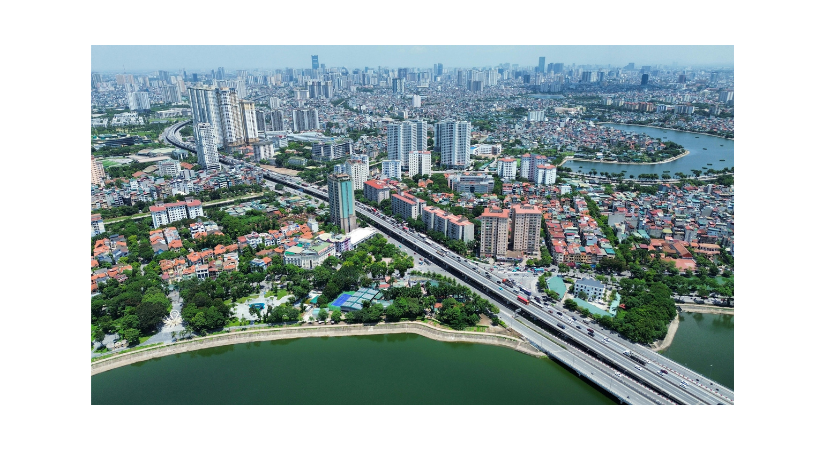
IT Sector: Every big software company you’ve heard of has an office here. Every GCC announcement this year seems to mention it too. The IT sector in Bangalore didn’t happen by accident, and it didn’t happen overnight either. It took four decades, a handful of stubborn policy decisions, and a fair bit of luck.
This piece looks at how a garden city known for its public-sector labs became the IT hub of India we recognise today, what the numbers look like right now, and why the story still matters if you’re a business trying to set up here.
From Public Sector Labs to Software Capital
Bangalore’s tech story didn’t start with software. It started with aircraft, electronics, and space research, decades before anyone called this the Silicon Valley of India.
The Early Foundations
HAL set up shop here in the 1940s. BEL followed in 1954, ITI in 1948, BEML in 1964. The Indian Institute of Science had already been running since 1909, quietly producing engineers and researchers year after year.
By the time software companies started looking for a home, Bangalore already had the one thing they couldn’t build from scratch: a deep, ready pool of technical talent. ISRO arrived in 1969, adding to a city that was already thinking in terms of precision engineering and long-term research.
None of this was IT in the way we think of it now. But it quietly built the base the IT sector in Bangalore would eventually stand on. Without those decades of public-sector investment, there’s a real chance India’s software boom would have landed somewhere else entirely.
Infosys, Wipro, and the Boom That Followed
Infosys was founded in 1978 and moved to Bangalore in 1983. Wipro built out its software arm around the same period, betting on the same city for many of the same reasons.
Then, in 1985, Texas Instruments opened India’s first MNC R&D center here. It was a genuine turning point, because it told the rest of the world that serious technology work could happen from this part of India, not just cheap back-office support.
Karnataka backed this up with policy. It became the first Indian state to publish a dedicated IT Policy, back in 1997, offering stamp duty exemptions, subsidized power, and easier land access for tech companies willing to build here. That combination, talent plus policy, is really what shaped the IT sector in Bangalore into what it is today.
Why Bangalore Became India’s Silicon Valley
Honestly, this nickname gets tossed around for half a dozen Indian cities these days. Bangalore’s the one that actually earned it first, though.
Part of it comes down to weather, believe it or not. Mild temperatures meant fewer disruptions for data centers and for people putting in long hours — sounds minor, until you think about cities dealing with brutal summer heat or monsoon flooding shutting things down every year. Then there was the talent. A big, English-speaking, technically trained workforce meant companies could just plug in here instead of spending years building a pipeline from scratch. And Karnataka’s government moved faster than most states on IT policy, which gave the IT sector in Bangalore a real head start.
Once Infosys and Wipro showed the model worked, everyone else followed. Google, Microsoft, IBM, Oracle, Goldman Sachs, Walmart — they all run major offices here now, alongside Infosys, Wipro, and Mindtree’s Indian headquarters. More than 45 unicorns call the city home too: Flipkart, Ola, Swiggy, Byju’s, Razorpay, Zerodha. A lot of those founders picked Bangalore for the same reason the big IT names did — the talent was already here.
The IT Sector in Bangalore: The Numbers Behind Its Dominance
Numbers make all of this easier to picture, and the IT sector in Bangalore has plenty of them worth knowing. The city currently employs roughly 1.6 million IT professionals, spread across services companies, product startups, and global capability centers.
The city accounts for somewhere between 38 and 40% of India’s total IT exports, which is a striking share for one metro to carry almost single-handedly. No other Indian city comes close to that concentration of IT companies operating at this scale.
India’s broader IT industry crossed $315 billion in revenue this fiscal year, with exports touching $246 billion, according to IBEF data. That’s the national picture. The IT sector in Bangalore contributes a share disproportionate to the city’s physical size, and that imbalance is exactly why so much commercial office space here gets built specifically for tech tenants rather than general business use.
How GCCs Are Reshaping Bangalore’s IT Industry
If the 1990s were about software services, the last several years have been about Global Capability Centers, or GCCs. These are in-house teams that global companies set up here to handle engineering, R&D, finance, and operations directly, instead of routing that work through an outsourcing vendor.
Bangalore now hosts over 400 GCCs, more than any other Indian city by a wide margin. That number keeps climbing every quarter, another sign of how much weight the IT sector in Bangalore carries within India’s broader technology economy, driven by companies wanting direct control over specialized, high-value work rather than outsourcing it to a third party.
This shift matters a lot for anyone renting office space in the IT sector in Bangalore right now. GCCs typically take up larger floor plates than a typical startup, sign longer-term leases, and want move-in-ready, well-connected buildings from day one. Landlords and operators across the IT sector in Bangalore have noticed, and a lot of new supply is now being built with exactly that tenant profile in mind.
Bangalore Tech Parks and Commercial Office Demand
None of this happens without somewhere to actually sit and work, of course. Electronic City alone covers 335 acres and houses over 200 companies. Add Whitefield, Manyata Tech Park, and Embassy Tech Village, and you’re looking at well over 8 million square feet of dedicated tech office space between them.
That’s really why the IT sector in Bangalore and the city’s commercial real estate market are so hard to separate from each other. Demand from IT companies and GCCs drives most of the new office construction happening right now, and it shapes a lot more than that too — which micro-markets see rent go up first, where the next metro line gets planned, all of it traces back to this.
IT Sector in Bangalore: What the Boom Hasn’t Fixed
Let’s be honest about the other side of this too. Bangalore’s traffic is genuinely bad, and it’s not a coincidence — decades of growth in the IT sector in Bangalore outpaced the roads and public transit a long time ago. Get stuck around Outer Ring Road during peak hours and a two- or three-hour commute isn’t unusual at all.
Water and power reliability take a hit too, especially in certain pockets during peak summer. A lot of the bigger campuses end up building their own backup infrastructure just to stay functional. Costs are climbing as well across the IT sector in Bangalore — office space, housing near the big tech parks, all of it — which is starting to push a few smaller companies to look at tier-two cities instead.
None of that has slowed things down much so far. But it is shaping decisions. Some GCCs and startups are choosing North Bangalore or newer corridors on purpose now, mostly to dodge the worst of the older, more congested areas.
What the IT Sector in Bangalore Means for Businesses
If you’re a founder or an HR head trying to set up shop, the practical takeaway is fairly simple. The IT sector in Bangalore gives you access to talent and infrastructure that took four decades to build, but it also means competition for the right office space in the right location is intense.
Wait too long to shortlist a spot near Electronic City, Whitefield, Outer Ring Road, or Manyata, and you’ll likely pay more for whatever’s left. These corridors grew up around the IT sector in Bangalore for a reason, and that’s exactly why they still get snapped up first, newer and less crowded options elsewhere in the city notwithstanding.
Rent today isn’t the only thing worth weighing either. A new metro line or tech park can quietly shift which corridor makes sense two years from now for anyone in the IT sector in Bangalore, so it pays to think a bit further out than just this year’s lease.
And not every business fits the same neighborhood. Founders running product startups usually gravitate toward Koramangala or Indiranagar for the energy. Bigger IT companies in Bangalore, along with most GCCs, head for the larger campuses out near Whitefield or Outer Ring Road instead. Picking the right corridor for your team beats hunting for whoever’s offering the lowest rate this week.
Final Thoughts
Bangalore didn’t become India’s IT hub because of one lucky break. Decades of public-sector research labs laid the groundwork. A state government that moved early on policy helped. And companies like Infosys and Wipro proved, pretty convincingly, that real global-scale software work could come out of an Indian city.
Four decades on, the IT sector in Bangalore carries close to 40% of the country’s IT exports and hosts more Global Capability Centers than anywhere else in India. If you’re setting up here now, that history isn’t just background trivia — it’s basically the reason certain neighborhoods, tech parks, and office formats look the way they do. Worth knowing before you sign a lease anywhere in this city.