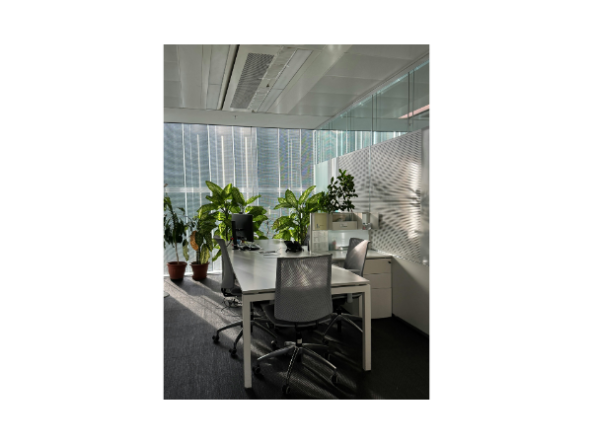


Choosing the right managed office space can make a significant difference to how a growing business operates. From location and pricing to meeting rooms, internet connectivity and flexibility, founders need to look beyond the monthly desk price before committing to a workspace. Nobody really agonizes over where they’ll work when they’re starting out. You take whatever’s closest, or wherever a friend already has a spare desk, and move on to stuff that feels more urgent — hiring, the product, chasing that first client. Then five or six months in, you’re stuck paying for eight seats nobody’s using, or scrambling to renegotiate a lease because the team just doubled. Choosing a workspace isn’t glamorous, but it ends up shaping how fast a young company can actually move — more than most people expect going in.
This isn’t another “why co-working is trendy” piece. If you’re actually trying to shortlist a co-working space in Bangalore this month, here’s roughly how I’d go about it.
Managed Office Space: Know What You’re Actually Comparing
Before shortlisting anything, it helps to be clear on the three options on the table, because people use these terms loosely and it causes confusion later.
Co-working is the loosest of the three. You’re renting a desk, or sometimes a small cabin, on a shared floor alongside freelancers and other small teams, usually on a month-to-month membership. Most co-working spaces in Bangalore throw in a pantry, meeting rooms, and some kind of event space too — though everyone on the floor is sharing those same amenities, so don’t expect a meeting room to always be free when you need it.
A managed office space is a notch above that. It’s a private, furnished floor or cabin set aside for just your company, but the operator still runs the day-to-day of it — housekeeping, internet, maintenance — so nobody on your team ends up chasing vendors.
Then there’s the traditional route, which is really just a bare-shell lease. Four walls and a landlord, and that’s about it — furniture, fit-out, and admin all land on you.
Honestly, none of the three is objectively better. It really depends on how big your team is right now, what you’ve got to spend, and — maybe more than anything — how long you actually think you’ll stay put.
If you’re a solo founder or maybe two or three people, co-working just makes sense — flexibility matters more than anything else at that stage. Once you’re somewhere around eight to thirty people, a managed office space tends to work better, mostly because you get some privacy without having to run the place yourself. And a traditional lease only really starts to make sense once your headcount’s settled down and growth isn’t such a wildcard anymore — otherwise a long commitment just feels like a bet you didn’t need to make.
Step 1: Figure Out What Your Team Actually Needs
A five-person sales team is a completely different animal from a three-person dev team. One’s on calls half the day and needs a booth or some kind of private corner to duck into; the other just wants a quiet desk and internet that won’t drop mid-call. Before you go touring anywhere, jot a few things down:
- How many people will actually be there on a normal weekday, not the headcount on paper
- Whether you need private cabins, or open desks work fine
- How often you’ll realistically need meeting rooms, and for how many people
- What your internet and call-quality requirements actually look like
Honestly, this is the step most founders skip, and it’s usually why they end up switching providers within the year — they picked on price and only found out later that the space didn’t match how the team actually works day to day.
Here’s a quick way to check yourself: picture a random Tuesday, three months from now. Where’s everyone actually sitting? On calls in a booth, heads-down at a desk, or moving between the floor and a meeting room all day? If you can’t picture that clearly, go tour a couple of places before signing anything — don’t decide off a floor plan alone.
Step 2: Shortlist by Location, Not Just by Listing
Bangalore’s traffic means a twenty-minute difference in commute can genuinely be the gap between people showing up on time and people showing up late every day. If most of your team and clients sit in the south-east side of the city, an office space in Koramangala tends to work well — it’s close to a fairly dense pocket of early-stage startups and investors, which is useful if in-person meetings happen often. Indiranagar, HSR Layout, and Whitefield each have a similar pull, just for a different crowd.
One trick that actually helps — plot out where your top five clients or investors are based, then shortlist around that cluster instead of just grabbing whatever’s cheapest on the other side of town.
Step 3: Look Past the Headline Price
The per-seat number in the brochure is rarely the full story. Ask for the actual all-in monthly cost, including:
- Meeting room credits (and what happens once you exceed them)
- Printing, parking, and guest-pass charges
- Whether the rate changes once you cross a certain seat count
- Security deposit and refund terms if you leave early
A startup office space that looks 20% cheaper on paper can end up costing more once meeting room overages and add-ons are factored in. It’s worth asking for a sample invoice from an existing tenant if the provider will share one.
A Quick Example, With Real Numbers
Say two providers quote ₹8,000 and ₹9,500 per seat for a five-person team. On paper, the first one looks like the obvious pick — that’s roughly ₹7,500 a month saved. But the cheaper option includes only four hours of meeting room access a month, after which every additional hour is billed separately, while the pricier one bundles unlimited meeting room use during business hours. If your team is client-facing and books a room three or four times a week, that “cheaper” option can quietly cost more by the third month. This is exactly why the all-in number matters more than the sticker price — the difference rarely shows up until the first invoice arrives.
Step 4: What to Check in a Managed Office Space
“Fully furnished” gets used loosely. Walk the floor, or at minimum ask for recent photos and a list of exactly what’s covered. A genuine managed office space or plug and play office should include working desks and chairs, stable high-speed internet, power backup, and basic housekeeping without extra charges. If any of these come as an “add-on,” factor that into your comparison.
It’s also worth asking about access hours. Some providers restrict 24/7 entry to higher membership tiers, which matters if your team occasionally works late or across time zones.
Another thing that’s easy to overlook: internet redundancy. A single ISP connection sounds fine until it goes down during a client demo. Ask whether the space runs on a backup line or a second provider, because “high-speed internet” on a brochure doesn’t tell you what happens on the one day it fails.
Common Mistakes Founders Make When Picking a Space
A few patterns show up again and again with first-time founders:
- Signing a longer commitment than needed just because it came with a small discount, then outgrowing the space within four months.
- Choosing purely on price without touring the space during working hours, and discovering later that noise levels or seating are a problem.
- Not asking how quickly they can add seats mid-contract, which becomes urgent the moment hiring picks up.
- Assuming every location branded as a “startup hub” actually has a strong founder community — some are just office buildings with a co-working sign on the door.
Most of these aren’t expensive mistakes, but they’re annoying ones, and all of them are avoidable with a single extra conversation before signing. If there’s one habit worth building early, it’s asking the slightly awkward question upfront — about lock-in, about scaling costs, about what “included” actually covers — rather than discovering the answer on an invoice three months later.
Step 5: Think About the Network You’re Buying Into, Not Just the Desk
This part is easy to underrate until you’ve experienced it. A shared office space in Bangalore puts you on a floor with other founders, freelancers, and small teams — and that proximity leads to things a lease agreement can’t promise: a chance introduction to an investor, a freelance designer who happens to be free next month, a founder two desks over who’s solved the exact hiring problem you’re stuck on. Gen Z entrepreneurs in particular tend to weigh this heavily when choosing where to base their company, because building a network alongside the business often matters as much as the desk itself.
Ask a provider how many events or founder meetups they host in a typical month. It’s a decent proxy for how active the community on that floor actually is.
Commercial Lease vs Co-working: When Each One Actually Makes Sense
There’s a point where the flexible model stops being the obvious choice. A company with a stable headcount of, say, 100-plus people may eventually find that a traditional commercial office is more suitable than a managed office space, and no expectation of major swings in team size, might find a straight commercial office space cheaper per seat than a managed or co-working setup once you run the numbers over three years. Flexible spaces are priced for uncertainty — you’re paying a premium for the ability to scale up or down without penalty. If your business doesn’t have that uncertainty anymore, that premium stops paying for itself.
For most early-stage teams, though, the flexibility is worth exactly what it costs, because nobody at that stage actually knows what their headcount will look like in eighteen months.
A Quick Checklist Before You Sign Anything
- Confirmed all-in monthly cost, including likely add-ons
- Toured the space at the time of day you’ll actually be working
- Checked meeting room availability during peak hours, not just off-peak
- Verified lock-in period and exit terms
- Asked about scaling costs beyond your current headcount
- Gotten a sense of the existing community on the floor
Questions Founders Ask Most Often
Is a flexible workspace worth it if we’re only two or three people? Pretty much always, at least early on. What you save on furniture and setup alone usually beats whatever small premium you’d pay compared to a bare-shell lease.
How early should we book once we’ve picked a place? If it’s a popular location, especially in the central business districts, seats can fill up two to three weeks out during busy hiring months. So once you’ve decided, don’t wait around till your current lease is nearly up.
Is the seat price negotiable? More often than people expect, especially if you’re committing longer or taking more seats. Doesn’t hurt to just ask — most operators have some flexibility, particularly outside of peak season.
What happens if our team shrinks instead of grows? Most membership contracts let you scale down at the next renewal cycle, though some charge a small adjustment fee mid-contract. It’s worth clarifying this upfront rather than assuming it works the same as scaling up — providers are naturally more flexible about growth than about giving up revenue.
Final Word
Choosing a workspace isn’t the most exciting decision a founder makes, but it’s one that keeps showing up in ways people don’t expect — team morale, client impressions, how easily you can hire. Whether you end up in a shared office space in Bangalore or a private managed floor, take the extra afternoon to actually compare options properly instead of defaulting to whichever place responded first. It’s a small amount of effort that tends to pay off for a lot longer than people expect.