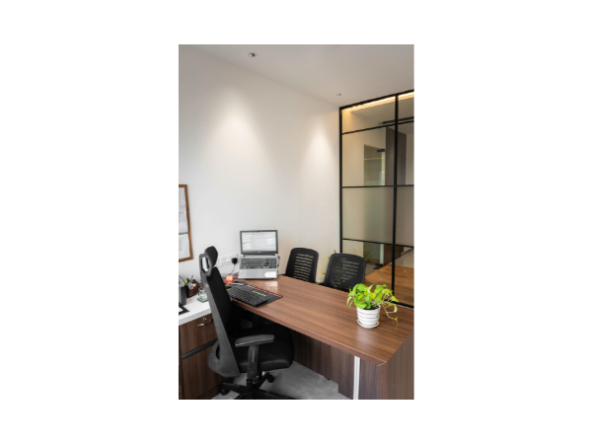

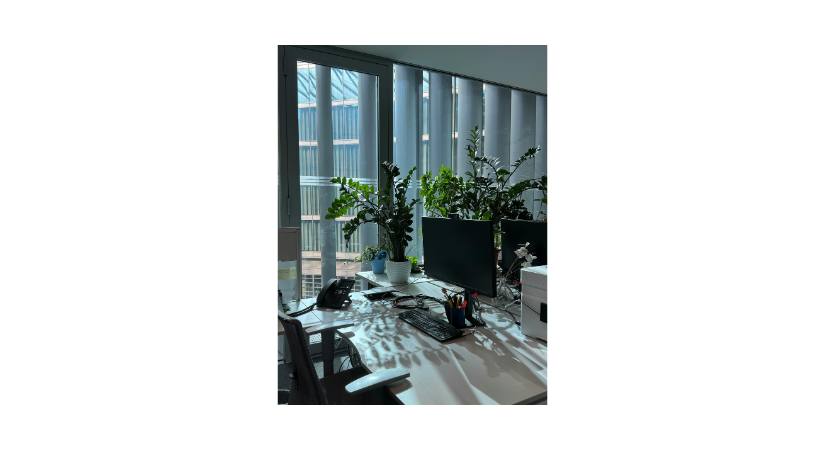
Somebody on your team is probably thinking about leaving right now, and it’s often got nothing to do with pay. Good salary, decent benefits, a manager who isn’t terrible — none of that stops Monday from feeling like a chore if the office space in Bangalore itself is a pain to be in. Office experience has become something businesses compete on, right up there with pay bands and growth opportunities, whether leadership has caught up to that or not.
Here’s what’s driving that shift, what the retention and hiring numbers actually show, and what it means for anyone choosing office space in Bangalore right now.
What Office Experience Actually Means
Picture two employees at the same company, same title, same pay. One works out of a building where the good meeting rooms vanish off the calendar within minutes, the AC never quite reaches her desk, and the lift queue alone eats fifteen minutes some mornings. The other works two kilometres away in a building that solved for all of that already. Same job, wildly different day.
That gap is what people mean by office experience now — not one perk, just how the space actually behaves once real people run real days through it. Can you book a room without a fight. Does the commute leave you frayed before 9am. Is there somewhere to take a call without three other conversations bleeding into yours.
This used to live entirely with facilities, something nobody revisited until a lease renewal forced the question. It sits a lot closer to leadership now, because it decides whether people stick around, how much they actually get done, and whether a strong candidate takes the job at all.
The bar has risen too, and fast. Five years ago, a working desk, wifi, and AC covered most of it. That’s not close to enough anymore, mostly because everyone has a built-in comparison now: home, where nobody’s fighting for a meeting room and nobody’s losing two hours a day to traffic.
The Business Case: Retention, Hiring, and Productivity
Put actual numbers next to office experience, and it stops sounding like a soft HR talking point.
Retention Numbers Worth Paying Attention To
Gallup’s research on office experience backs this up directly: “Engaged organizations see 59% less employee turnover” (Gallup, 2022). McKinsey found something similar from a different angle — employees who describe their work experience as positive show engagement levels 16 times higher than those with a negative one. And more than 63% of companies now admit that holding onto people has gotten harder than hiring them in the first place, which flips how a lot of HR budgets used to get allocated.
Return-to-office mandates have made this worse in a lot of cases, not better, even though leadership rarely sees it that way. As Archie’s 2026 research puts it, “93% of business leaders believe employees should be in the office at least part of the week” — a belief that keeps colliding with what actually keeps people around. Eight in ten companies say they’ve actually lost talent because of RTO policies. Firms with rigid attendance rules see turnover run roughly 13 points higher than companies with more flexible approaches. Close to half of remote-capable employees say they’d quit if that option went away, and about the same number say they’d take a pay cut just to keep it.
Talent Acquisition Runs Through Culture and Space
Candidates size up office experience and culture before they’ve even signed anything. Around 77% of job seekers dig into company culture before applying, and the office itself is one of the most visible parts of that culture whether a company means it to be or not. A tired, cramped space sends a message just as clearly as a well-thought-out one does, even if nobody says a word about it during the interview.
It shows up in acceptance rates too, even though almost nobody tracks it directly. Given two similar offers, people increasingly picture what an actual day would feel like at each place, not just what the number on the letter says.
Why Amenities Alone Aren’t Enough
A coffee bar and a games room look like the easy fix. The numbers say something different.
Only 53% of employees stay away because of weak amenities. A much bigger chunk, 77%, say they show up mainly to see and work with actual people. Amenities help at the margins, but they’re not the reason people choose a particular office space in Bangalore — connection and focus matter more, and no ping pong table saves a building where neither of those things work.
This is exactly where a lot of RTO policies fall apart on office experience. Under half of employers, 47%, think their office actually supports hybrid work. Even fewer employees, 42%, agree with them. Companies keep forcing attendance without fixing what would make people want to show up on their own.
What’s Actually Driving People Back to the Office Space in Bangalore
Office usage data across office space in Bangalore tells its own story here. Roughly 73% of offices sit at or near capacity on peak days, while 66% run under 60% utilization the rest of the week. That gap says more about design and scheduling than it does about enforcement — people come in when there’s a real reason to, and they stay home otherwise, no matter what the policy says on paper.
For office experience, location matters more than most companies want to admit too. About 62% of employees point to an inconvenient location as the reason they skip the office, which means office experience starts long before anyone reaches the front door. Commute, transit access, whatever’s around the building — all of it counts now, not just what’s inside. This holds especially true for office space in Bangalore, where traffic patterns swing sharply from one corridor to the next.
What Good Office Space in Bangalore Looks Like
Strip away the buzzwords and good office space in Bangalore comes down to a short, practical list. Meeting rooms you can actually book, not ones permanently claimed by whoever holds a recurring calendar invite. Real daylight and air that doesn’t feel stale, since both affect concentration more than most leadership teams give credit for. A commute that’s short and, just as important, predictable — unpredictability wears people down faster than distance ever does.
Noise gets ignored more than it should in most office plans. An open floor plan looks great in a rendering and falls apart the second twenty people are on calls with nowhere quiet to duck into. A handful of phone booths or small focus rooms probably do more for office experience than any redesign budget spent on furniture.
None of this needs a huge budget to fix. It needs someone to treat office space in Bangalore as a place people actually use, not a line item that mostly exists to justify a lease.
How This Plays Out in Office Space in Bangalore
This shift shows up clearly across office space in Bangalore right now. Companies competing for the same pool of engineering and GCC talent are increasingly choosing office space in Bangalore based on amenities, connectivity, and overall workplace feel, not just square footage.
Managed office space in Bangalore has benefited directly from this, since operators tend to build in the things that raise office experience by default — better common areas, more reliable facilities management, and locations picked with commute and connectivity in mind instead of just the cheapest rate per square foot. A company signed into a bare-shell office in a poorly connected building is effectively competing for talent against companies that solved for office experience from day one.
Landlords and operators offering managed office space across the city have started marketing on exactly this basis, mostly because tenants evaluating office space in Bangalore are asking about office experience directly during site visits now, not treating it as a footnote to the lease negotiation.
What Businesses Should Actually Do About It
Start by figuring out what your own office space in Bangalore actually solves for. If meeting rooms are perpetually booked, if the commute is dreaded by everyone, or if the only reason people come in is a mandate, no amount of policy enforcement fixes retention on its own.
Walk the numbers back to your own team. Engagement surveys, exit interviews, and basic headcount-versus-desk-usage data usually reveal a gap between what leadership assumes about their office space in Bangalore and what employees actually deal with day to day. Most leadership teams are surprised by how wide that gap turns out to be once they actually look.
Talk to the people who left too, not just the ones who stayed. Exit interviews tend to surface honest feedback about office experience that engagement surveys, filled out by people still hoping for a promotion, rarely capture. That gap between polite survey answers and blunt exit feedback is usually where the real problems hide.
When you’re evaluating new office space in Bangalore, treat office experience as a real line item next to rent and square footage, not something decided last by whoever handles the interior. The businesses winning talent right now treated office experience as a genuine decision factor from the start, not a bonus feature bolted on after the lease was already signed.
Final Thoughts
Office experience has moved from a nice-to-have into a real competitive lever across office space in Bangalore, backed by retention numbers, hiring data, and utilization patterns that are hard to argue with. Companies chasing attendance through mandates alone are fighting the wrong problem. The ones building a workplace people actually want to be in are pulling ahead on hiring and retention without having to force the issue.
For any business evaluating office space in Bangalore right now, this deserves more weight than a facilities decision usually gets. It’s become one of the clearest ways to compete for talent in a market where salary alone doesn’t settle much anymore.